
Common Toenail Problems We Treat:
Laser Treatment for Toenail Fungus
Introduction
The fungus organism and its spores are very common in air and soil around the world. The pathogen most responsible for toenail fungus is called trichopyton rubrum fungus. Toenail fungus can be caused by trauma, poor foot hygiene, and diabetes and can affect people of any age. For unknown reasons, some people are more susceptible to contracting fungal infections. Fungus thrives in a dark, warm and moist environment, which is common in most shoes. Many people who suffer from toenail fungus are embarrassed to wear sandals or open shoes, and in some cases the infection can be painful.
Approximately 25 million Americans have some form of onychomycosis. Laser treatment is effective in approximately 90% of all cases. This revolutionary protocol is the most effective treatment for this very common and unsightly condition. Once the fungal infection has been resolved by the laser therapy and clear nail growth has begun, it’s important to take several hygienic measures in order to maximize the long-term benefits.
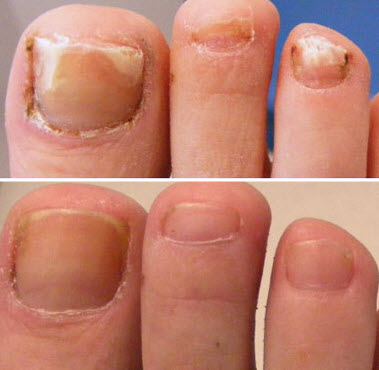
Before and After Laser Treatment
How do I know if I have toenail fungus?
You may suffer from onychomycosis of the toenails or finger nails if they appear thickened, brittle, crumbly, distorted, or darkened with underlying debris.
Can onychomycosis be treated by other methods?
Prescription antifungal medicines, such as Lamisil®, taken orally, may help clear the fungus in about 50% of patients. The oral medications need to be taken daily for three months. However, such medications require periodic blood tests, can cause side effects such as taste or stomach disturbance, allergic reactions or can interfere with other medications. Some of the oral medications used to treat fungal infections of the nail can impact the liver.
Before the introduction of laser therapy, in some cases, total removal of the toenail was the only way to effectively cure the disease.
How does the laser treatment work?
The laser therapy works by using a specific wavelength laser light that passes through the nail and the surrounding tissue. The laser light is absorbed by pigment in the fungi, which causes it to heat and kill or damage the fungal organism. This results in your nail growing out normally.
Is the laser treatment painful?
The laser treatment does not harm healthy tissue, and most patients do not experience any significant discomfort either during or after the procedure. You may, however, experience a mild warming sensation or periodic pin prick sensations that may last a fraction of a second. No anesthesia is needed.
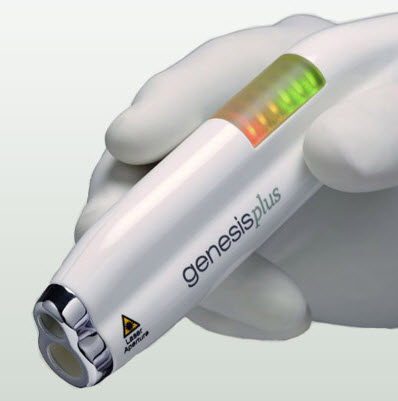
Laser Handpiece During Treatment
What can I expect during the laser treatment?
It is important that you do not have any polish, ornaments, creams or lotions on your toes. No medication, injections or sedation is required. You will be seated in a regular treatment chair, wearing special protective laser eye glasses. Depending upon the thickness of your nails due to the fungus, your nails may be thinned using an electric grinding instrument. Thinning is important so the laser will be most effective. The entire treatment lasts approximately 40 minutes.
How long will it take for healthy nails to grow?
A healthy toenail requires approximately one year to grow from the cuticle or eponichium to its full length. Toenails grow more slowly than fingernails. The first growth of clear nail that is free of onychomycosis is seen at about three to four months after the initial laser therapy. The clear nail growth will continue to push out the infected fungus nail.
Has the FDA evaluated the laser?
Yes; the Cutera® GenesisPlus treatment is FDA cleared for onychomycosis.
Are all lasers and laser treatments the same?
It is indeed unfortunate that on the internet and in the media, there are some medical claims that are either invalid or demonstrate exaggerated claims. There are advertisements for lasers that have not been clinically proven or that have not been cleared by the FDA. Just as you would with any treatment plan, be sure you clearly understand the claims and expectations of the treatment outcome.
The use of a laser for the treatment of onychomycosis is not simply “point and shoot.” There are numerous treatment methods that can vary considerably among doctors. In addition, there are different types of lasers that your doctor can choose.
Why choose Cutera® GenesisPlus laser?
- One of only two lasers FDA cleared for onychomycosis as of June 2011.
- Cutera is a worldwide leader in laser technology for medical purposes.
- Specialized heat sensor on hand piece provides accuracy and safety of treatment.
- Proven effectiveness
Will I be able to walk after the laser treatment?
Most people are able to simply put on their shoes and walk out of the office immediately after the procedure and resume their normal activities.
How long does the laser treatment take?
Each laser treatment takes about 15 minutes for all ten nails. The length of time depends upon the severity of the nail condition.
How many laser treatments are needed?
Up to a total of three laser treatments are provided during the first year. The number of treatments is dependent upon the severity of the fungal condition. Before the beginning of the laser treatment, the number of laser treatments will be fully discussed.
What are the after-care instructions for the laser procedure? What about re-infection?
A comprehensive plan to prevent reoccurrence is critical to long-term success. The feet should be bathed daily with warm water, soap and a wash cloth or nail brush. Using only soap and water and hand pressure is not effective. It is also important to use a nailbrush a few times each week with a mildly abrasive detergent such as Soft Scrub. Good foot hygiene is as important as good dental hygiene.
The average foot perspires about four ounces of sweat daily. This sweat provides the perfect breeding conditions for fungus. Even if you allow your shoes to partially dry out during the evening hours, they will likely still be damp in the morning and contain fungal organisms. Although there is no perfect solution to this problem, there are several options.
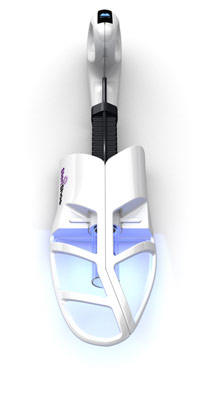
SteriShoe
The SteriShoe® is an ultraviolet shoe sanitizer that effectively kills fungus and bacterial organisms using ultraviolet (UVC) light. UVC has been used for decades in hospital and municipal water treatment plants throughout the world. This chemical-free therapy is both effective and protective of the environment. We recommend the use of the SteriShoe® in conjunction with the laser nail treatment. It will not cure your infection, but it will provide a cleaner environment for your feet. Fungi are very resilient and can live in your shoe as spores, even if you don’t wear a shoe for months. Spores are similar to seeds. Once you start to wear your shoe again, the perspiration and heat from your foot will cause the spores to grow. The SteriShoe destroys the fungi and other microorganisms. A SteriShoe treatment takes approximately 40 minutes and one device be used on multiple shoes in your home. The cost of a SteriShoe is $120.00.
The fiber of your socks is also important. Cotton is the worst fiber because it absorbs the sweat of the foot and keeps it in continual contact. The synthetic fibers such as blends of acrylic, polyester and nylon are strong, but are minimally effective in keeping the foot dry. These plastic fiber socks are promoted as wicking sweat away from the skin, but those claims are poorly substantiated in clinical trials. In addition, they may cause increased foot odor. Socks that keep the foot very dry and do not cause foot odor are made of a high percentage blend of merino wool and small amount of nylon and spandex (for strength.) These socks are available at SmartWool® and at sporting goods stores such as REI. Some people believe that wool socks are either hot or itchy. Our patient’s experiences disprove these ideas.
Can I use nail polish after the laser treatment?
Toenail polish can be reapplied the following day after the laser treatment. It is important to note that all nail paint and nail polish has to be removed prior to having the laser treatment performed.
What is the cost for the treatment?
The total cost of the laser treatment is dependent upon the degree of fungus in the toenails. Some people are much susceptible to fungus than others due to personal physiological differences such as foot perspiration. Additional treatments are often necessary. Therefore a consultation appointment is recommended. In general, the average cost of the complete laser treatment is between $500.00 and $1,000.00
How can I pay for the procedure?
We accept most major credit cards (VISA, Mastercard, American Express and Discover), debit cards, checks and cash. Payment plans are also available. For more information on financing and payment plans, please visit: CareCredit®.
Is this procedure covered by my medical insurance?
Since toenail fungus is considered a cosmetic condition, health insurance companies and Medicare do not provide coverage for laser treatment. Patients with Heath Savings Accounts or Flexible Spending Accounts may be able to apply those funds toward the treatment, however we recommend that you check with your specific plan.
Toenail Fungus or Onychomycosis
Fungusl infection of the toenails, or onychomycosis, is a common foot problem. A majority of sufferers don’t seek treatment, perhaps not even recognizing the existence of a problem. One reason that people may ignore the infection is that it can be present for years without causing pain. Its prevalence rises sharply among older adults.
The disease, characterized by a change in a toenail color, is often considered nothing more than a mere blemish — ugly and embarrassing. It is apparently assumed that since white markings or a darkening of the nail are minor occurrences, the change represents something minor as well, even when the blemish spreads.
In many cases, however, that change in color is the start of an aggravating disease that ultimately could take many months or years to control. It is an infection underneath the surface of the nail, which can also penetrate the nail. This disease can frequently be accompanied by a secondary bacterial and/or yeast infection in or around the nail plate.
What is Nail Fungus?
Onychomycosis is an infection of the bed and plate underlying the surface of the nail caused by various types of fungi commonly found in the environment. Fungi are parasitic plant organisms, such as molds and mildew, that lack chlorophyll and therefore do not require sunlight for growth. A group of fungi called dermatophytes easily attack the nail, thriving on keratin which is the nail’s protein substance.
When the tiny organisms take hold, the nail may become thicker, yellowish-brown or darker in color and foul smelling. Debris may collect beneath the nail plate, white marks frequently appear on the nail plate. The infection is capable of spreading to other toenails, the skin, or even fingernails.
Other contributory factors may be a history of athlete’s foot, improper cleansing, anxiety and excessive perspiration.
Prevention
Because fungi are everywhere (including the skin) they can be present months before signs of infection appear. By following certain precautions, including proper hygiene and regular inspection of the feet and toes, chances of the problem occurring can be significantly reduced.
Clean and dry feet resist disease. A strict regimen of washing the feet with soap and water is the best way to prevent an infection. Shoes and socks should be changed daily.
It is very unlikely that a few exposures to an unclean environment will cause a fungal infection. Walking barefoot once or twice in a public shower will not generally spread the infection. Similarly, it is also unlikely that a single visit to a pedicurist will cause the infection. Lengthy exposure to a contaminated environment is often required in order to contract the fungal infection although individuals may be more susceptible to fungal infections than others.
Socks made of high percentage of merino wool are best. Synthetic fibers (such as acrylic, polyester or nylon), or cotton socks tend to create a moist environment that is the perfect breeding ground for toenail fungus.
Artificial Nails and Polish
Moisture collecting underneath the surface of the toenail would ordinarily evaporate, passing through the porous structure of the nail. The presence of an artificial nail or polish impedes evaporation.
Treatment
Depending on the nature and severity of your infection, treatment may vary. Most over-the-counter treatments are minimally effective at best, and none of them have produce a permanent treatment. The main reason for these poor results is that the fungal infection resides deep within the nail or nail bed, and the topical medications have great difficulty in penetrating to this depth. A fungus may work its way through the entire nail, penetrating both the nail plate and the nail bed.
Podiatric Medical Care
We can diagnose a fungal infection, culture the nail if necessary, and form a suitable treatment plan. The most effective method of treating toenail fungus is with the use of a laser.
The two most common oral medications are Lamisil and Sporonox. These medications are very similar in most respects, and are about 60% effective. The medication is taken daily for three months. A total of approximately nine months is required to see new healthy nail growth.
A topical medication is Formula-3. This medication is generally less effective than the oral medications, and is best used with a limited fungal infection. Formula-3 needs to be applied twice per day for approximately six months.
In some cases, surgical treatment may be required. Temporary removal of the infected nail can be performed. If there is no response to other treatment methods, permanent removal of a chronically painful nail may become necessary.
Ingrown Toenail Treatment
When the hard toenail presses excessively against the soft skin on the edges of the nail there is usually pain. Typically, the nail presses for extended periods of time and an infection, or paronychia develops. This toenail infection is usually very painful, develops pus, and causes the end of the toe to become red and swollen.
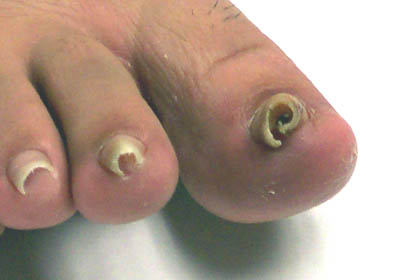
This photograph shows three degrees of severity of ingrown toenails. The big toe (hallux) has a severe ingrown toenail, where the nail is curved in almost a complete circle. The second toe has moderate severity. The third toe demonstrates a mild level of incurvation. Although it is very common for the skin around the nail to become infected (called a paronychia), here there is no infection present.
At least half of the ingrown toenails that we treat are caused by improper cutting of nails. Many people try to cut the corners of their toenails and either cut the skin or leave a small point of nail which eventually grows into the flesh. This makes a simple problem more complicated. Nails should be cut flat across the top, and the corners should not be cut out. If you feel the need to cut the corners, it should be done only by a podiatrist.
Most drug store topical “cures” for ingrown toenails are ineffective. They may soften the nail edge or decrease the soreness for a short period of time, but they do not cure the problem. The source of the problem is present under the cuticle at the nail root.
The cure for an ingrown toenail usually involves numbing the toe with a local anesthetic such as lidocaine or novocaine. The toe will become completely numb and there will absolutely no pain during the procedure. Approximately a 1/8 inch section of the nail plate will be removed from the painful corner. If an infection is present, it will be treated at the same time. The most important part of the procedure involves the removal of that 1/8 inch section of nail root, so the problem will not return. If the root is not treated, then the abnormally growing nail plate will grow back in the same place and cause a similar problem within a few months.
After treatment a small dressing is placed on the toe and a regular shoe can be worn. Some people prefer to wear a wider shoe, tennis shoe, or an open sandal. The foot is soaked in warm water and the dressing is changed at home the following day.